

Researchers say study may help global efforts in controlling disease that still destroys crops today
By Nicola Davis, The Guardian, Science correspondent
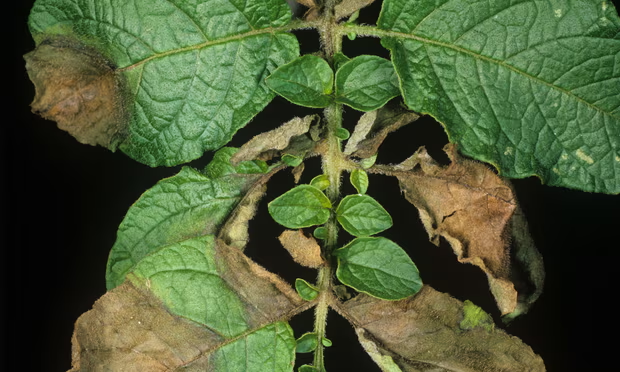
Photo credit: Phytophthora infestans lesions on potato leaves. Scientists carried out an analysis of the microbe genomes from South America and Mexico. Photograph: Nigel Cattlin/Alamy
It was a disaster that killed about 1 million people, devastating 19th century Ireland, but while the potato disease linked to the Irish famine is well known, a battle has raged over where it originated.
Scientists have long been divided over whether the fungus-like pathogen Phtytophthora infestans cropped up in the Andes or originated in Mexico.
Now one team of researchers say the question is settled after conducting what they describe as one of the largest whole genome studies of the microbe and its close relatives – with the results supporting a South American origin.
It was a disaster that killed about 1 million people, devastating 19th century Ireland, but while the potato disease linked to the Irish famine is well known, a battle has raged over where it originated.
Scientists have long been divided over whether the fungus-like pathogen Phtytophthora infestans cropped up in the Andes or originated in Mexico.
Now one team of researchers say the question is settled after conducting what they describe as one of the largest whole genome studies of the microbe and its close relatives – with the results supporting a South American origin.
Click on the link below for the full article at The Guardian, by Nicola Davis
Scientists point to Andes potato pathogen as origin of Irish famine